Justin Ma's Notes on Traditional Chinese Archery
Please explore our website for more information on our Ming-Chinese Military Archery system. You are also welcome to contact me at thewayofarchery@gmail.com.
Introduction
A desire to renew the connection with my heritage is one of the main reasons that I pursued traditional Chinese archery starting in December 2009. The other reasons are that I enjoy the bare-bones challenge—as traditional Chinese archery has no need for the shelves, sights, and stabilizers used in modern archery. And I enjoy continually learning new things about this art, whether it's a new archaeological discovery that sheds light on what ancient Chinese bows and arrows looked like, or an "Aha!" moment in practice. Finally, I enjoy the intrinsic diversity of Chinese archery, as it encompasses many styles of equipment and schools of thought.
I'd like these notes to serve as a starting reference (with external pointers to more in-depth resources) for those interested in beginning traditional Chinese archery. Originally, very few people taught the Chinese style in the US, and I struggled early to find the right learning resources. I hope these notes can point beginners to the right places so they can find a direct path to enjoying this martial art.
Other styles of Asian archery (e.g., Mongolian, Tibetan, Korean, Japanese, Turkish, Arabian, Persian) have a lot in common with the Chinese style, but they also have their own unique characteristics. If you're interested in learning more about other Asian styles, visit the links in the background section. You may still find my equipment recommendations useful.
Background
Archery was thoroughly embedded in Chinese culture and history for thousands of years, permeating legends, rituals, and military practices. It was one of the Six Noble Arts as early as the Zhou period, and Confucius himself was an archery teacher. Archery was easily the most prestigious of the martial arts, as the author of Wu Bei Zhi (a famous Ming Dynasty military encyclopedia) wrote: "The bow is the primary among all weapons, so those who write of military affairs write first about bows and arrows." Yet despite its rich history, traditional Chinese archery was on the brink of extinction in the 20th century.
However in the 21st century, the art is experiencing a revival thanks to the determined efforts of craftsmen, researchers, promoters, and enthusiasts worldwide.
- For an in-depth discussion of archery traditions in Chinese history and culture, Stephen Selby's "Chinese Archery" ↗ is an indispensable reference.
- The ATARN (Asian Traditional Archery Research Network) ↗ features foundational research articles and community discussions.
- The Chinese Archery Wikipedia article ↗ provides a broad historical summary.
Technique
My technique is derived from Gao Ying's teachings, which date to 1637 AD. Gao Ying was an archery master from the late Ming dynasty. However, there is no such thing as a single "standard" way to practice Chinese archery—there exist many historical variations that differ in philosophy, mental approach, follow-through with bow/draw hands, anchor heights, and draw lengths.
Five Fundamental Characteristics:
1. The Thumb Draw


The Chinese most commonly used the thumb draw, as did many Asian traditions including Mongolians, Koreans, Japanese, Turks, Arabs, and later Persians and Mughals. Even the Romans used the thumb draw. During earlier periods (e.g., Zhou dynasty rituals), the 3-finger Mediterranean draw was also practiced.
2. Nocking Without Looking at Your Hand
By tactilely nocking the arrow without looking down at your hand, you keep your focal attention on the target (critically important on horseback or in dynamic combat).
3. Proper Skeletal & Body Alignment
Good, upright posture and skeletal engagement protect the joints and allow archers to draw military-weight bows safely and sustainably.
4. Aiming Systems: Instinctive & Split Vision
For any system of aim to work, your physical form must be consistent.
Instinctive Aim
You feel the force vector through your body and between your hands, coordinating muscle memory with vision. With extensive practice, it is the most versatile system for moving targets and variable distances.
Split Vision
Focal vision stays locked on the target while peripheral vision registers the arrow shaft, arrowhead, or bow handle offset. With mastery, Split Vision naturally transitions into instinctive shooting.
5. Mental Focus & Breath Control
Calmness under pressure, emotional regulation, and deep focus are central to traditional archery as both a martial discipline and a philosophical practice.
I used to believe that Chinese draw lengths had to be extremely long. However, history shows a vast variety of draw lengths—from short draws near the corner of the mouth or chest to long draws well past the ear. My current draw length is 28" measured to the back of the bow handle, and I size my arrows slightly longer (~7/8") for safety and tactile reference against the arrowhead.
Equipment
Historical Bow Designs
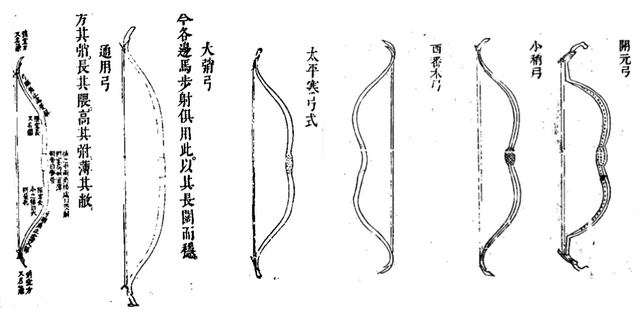
Chinese composite bows are typically static recurves, where rigid levers (siyahs or ears) face away from the archer when unstrung. Historical Chinese bows fall into several major categories across eras:
- Wood Selfbows (e.g. ancient mulberry longbows)
- Wood/Bamboo Composite Bows [Warring States through Han Dynasty]
- Simple Horn Bows [Zhou Dynasty]
- Scythian Horn Bows [Zhou Dynasty]
- Straight-Ear Horn Bows [Through Song Dynasty]
- Conquest Mongol Horn Bows [Yuan Dynasty]
- Small-Ear Horn Bows (resembling Korean or Crimean-Tatar bows) [Ming Dynasty]
- Large-Ear Horn Bows (resembling Kaiyuan or Indo-Persian bows) [Ming Dynasty]
- Manchu Horn Bows [Qing Dynasty]
Bows You Can Buy
Traditional organic composite bows (horn, bamboo/wood, sinew, fish-bladder glue) typically cost between $1,500–$3,000. For modern archers, laminated fiberglass and carbon Asiatic bows provide durable, high-performance, and affordable alternatives.
⚠️ Important Beginner Advice:
If this is your first time shooting with the thumb draw, do not start with a bow that is too heavy. Begin with a draw weight of 35# or under to allow your tendons, ligaments, and thumb joint to adapt safely to the draw mechanics.
Arrows
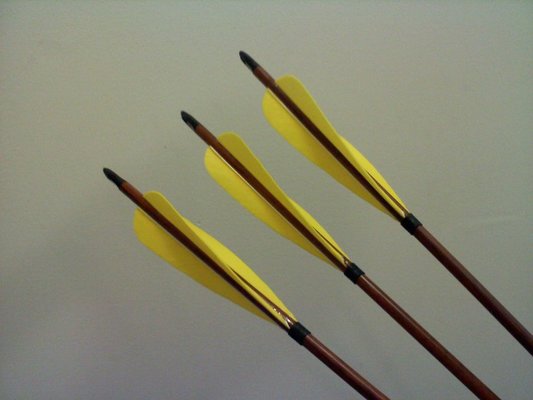
Because traditional Chinese archery entails shooting off the hand without an arrow rest or shelf, arrow selection is essential:
- Shaft Material: Bamboo, carbon (e.g. Gold Tip Traditional Hunter, Carbon Express), or aluminum (Easton Gamegetter). Wood shafts should be sourced from reputable suppliers to ensure straightness and avoid splintering over the hand.
- Fletching: Natural feathers (4"–5" parabolic). Ensure the quill tip is smooth or wrapped with silk/glue (such as Duco cement) so it cannot cut the bow hand during release.
- Points: Target or field points. (Broadheads are prohibited on standard practice ranges).
Thumb Protection
Thumb Rings
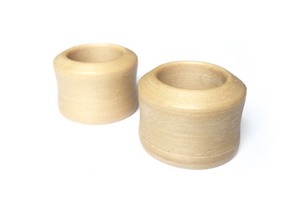
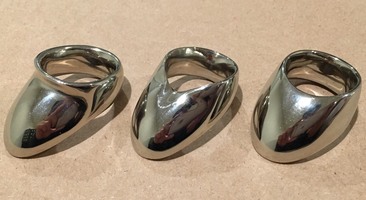
A properly fitted thumb ring transfers string force directly to the thumb bone and pad, keeping pressure on the skin near zero. Styles include cylindrical (Manchu style) and lipped (Mongol/Turkish style).
Leather Thumb Guards
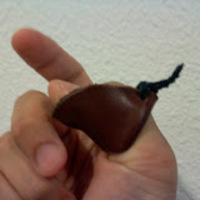
A folded leather thumb guard is an accessible, soft alternative for light to medium draw weights. You can view our guide on How to Make a Leather Thumb Guard ↗.
Optional Accessories
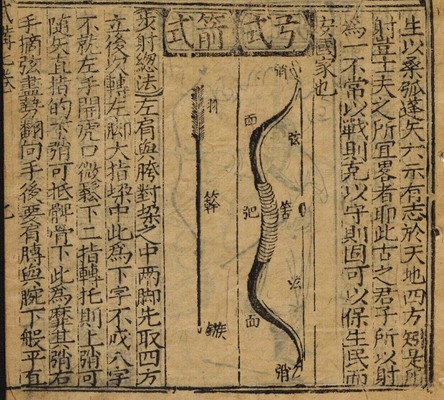
Nock Point Indicators: Putting a nocking point on the bowstring helps consistency. Historical treatises mention the 筈 (kuò), which served as either a nock locator or a thickened center serving.
Bow Hand Glove: While proper hand orientation prevents arrow contact, beginners may wear a light leather bow glove for protection during early practice.